





AI automation looks impressive when everything works perfectly. A model interprets a request, an agent chooses the right tool, data moves between systems, and a complicated workflow finishes without anyone touching it. Production environments are…

AI automation looks impressive when everything works perfectly. A model interprets a request, an agent chooses the right tool, data moves between systems, and a complicated workflow finishes without anyone touching it. Production environments are…

Traditional automation works brilliantly when the world behaves exactly as expected. A trigger occurs, predefined rules run, and the process follows the same path every time. Business rarely stays that predictable. Customer demand changes, suppliers…

Traditional workflow tools are great when the process is predictable. A form arrives, someone approves it, another system receives the data, and the workflow moves to the next predefined step. Real enterprises are rarely that…

Knowledge work has traditionally been difficult to automate because it depends on more than repetitive actions. Analysts interpret incomplete information, consultants compare competing arguments, lawyers review complex documents, engineers investigate technical problems, and managers make…

Enterprise workflows rarely fail because employees are unwilling to work. They usually become slow because information has to move through too many systems, approvals, spreadsheets, inboxes, and manual handoffs. Traditional automation solved part of this…

Machine learning has a habit of making cloud bills grow faster than expected. A small experiment might need one CPU instance for a few hours. A production deep-learning project can suddenly require dozens of GPUs,…

Building a machine-learning model in a notebook can be surprisingly easy. Running that same model for millions of users is a completely different engineering problem. Production AI needs accelerators, model servers, storage, networking, monitoring, security,…

Hybrid cloud used to have a fairly simple definition: keep some infrastructure inside your own data center and move everything else to the public cloud. That description is becoming outdated. Modern businesses now operate applications…
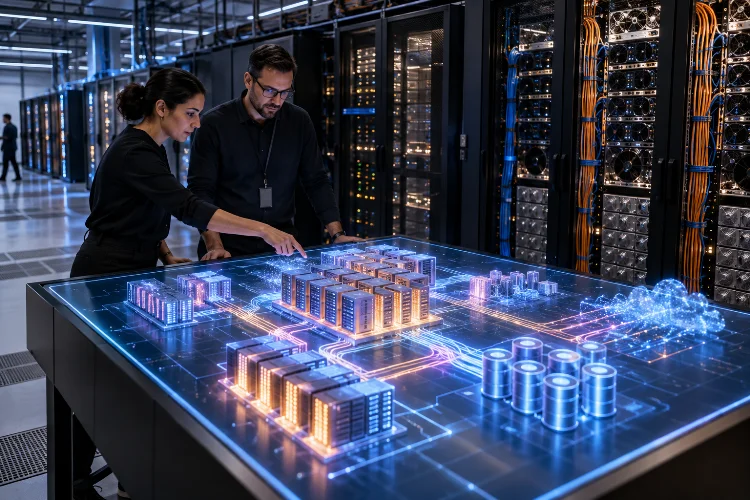
Running a normal web application and running a large AI workload may both happen in the cloud, but the infrastructure demands can be completely different. Traditional applications often scale around CPU capacity, database connections, and…

Cloud computing solved many infrastructure problems, but putting everything into one cloud region can quietly create another one: concentration risk. A company may have hundreds of microservices, multiple databases, automated workflows, and sophisticated monitoring. Yet…